As an Amazon Associate, we earn from qualifying purchases. Some links on this site are affiliate links at no extra cost to you. Our recommendations are based on thorough research and editorial judgment.


3 Easy Checks For Better Fabric Purchases

Want to be a fabric-shopping pro? 🧵 You'll need these three quick checks before buying! First, get hands-on with the fabric composition – give it a good feel and check the label for those perfect blends. Next, examine the weave and texture under natural light (those store fluorescents can be tricky!). Finally, do the stretch test – gently pull the fabric in both directions to check its recovery and consistency. These simple steps will help you avoid those "what was I thinking?" moments at your sewing machine! Stick around, because there's so much more to becoming a savvy fabric shopper. ✂️
Key Takeaways
- Test fabric stretch in multiple directions and assess recovery to ensure consistent flexibility and shape retention.
- Examine weave patterns and texture quality under natural light to spot any flaws or inconsistencies.
- Check fabric composition through labels or seller information to match material properties with project requirements.
- Inspect the entire fabric length for uniform color, pattern alignment, and potential weak spots.
- Feel the fabric's texture with your hands to evaluate comfort, durability, and overall quality.
Understanding Fabric Composition
You may be interested
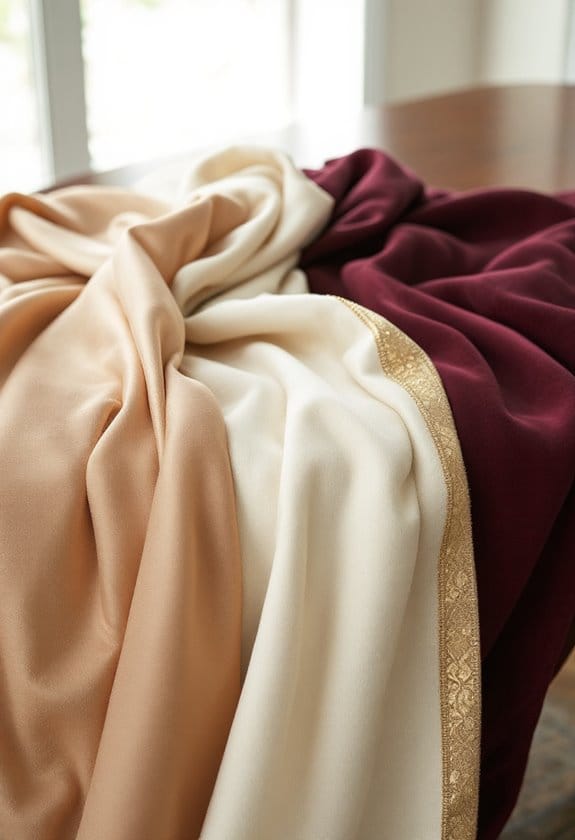


Remember, different blends mean different superpowers – wool-silk for cozy elegance, cotton-spandex for sporty stretch, and pure linen for those breezy summer vibes! Your perfect fabric match is out there, just waiting to be discovered. 🧵
Inspecting Weave and Texture
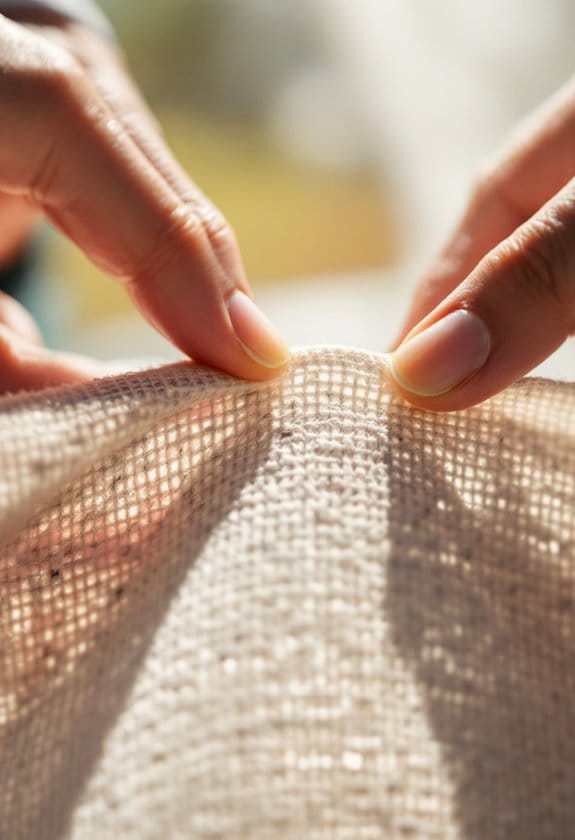
Different weave patterns create different effects for visual appeal. Take twill, for example – it's more structured and durable than a floaty chiffon. To choose the right fabric for your needs, think about both looks and function! A super-soft cotton might be perfect for pajamas, but that same texture wouldn't work for a sturdy bag. Remember: natural lighting is your best friend when checking colors and textures. Trust your eyes and your fingertips! 🧵✨
Testing Stretch and Recovery
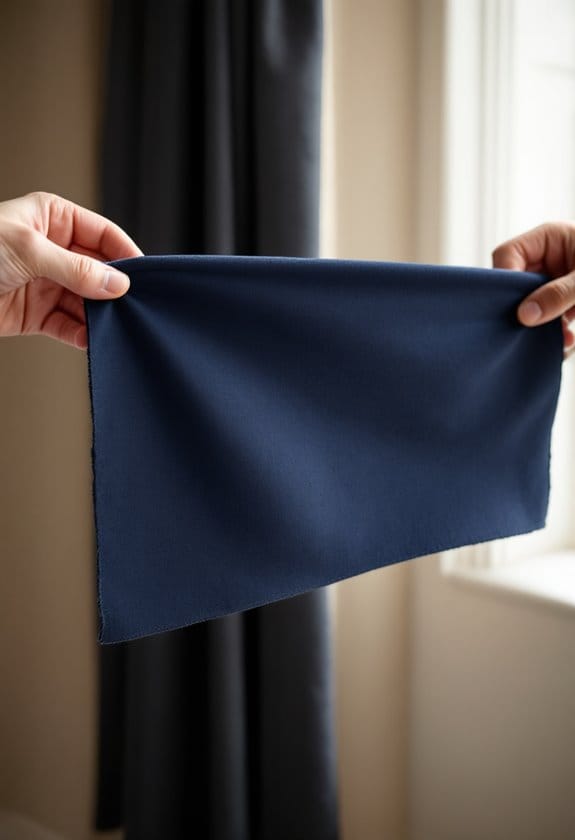
Flexibility in fabric can make or break your sewing project's success. When you're testing stretch, simply grab the fabric and give it a gentle pull in both directions – you'll quickly see how much give it has! 💪 Knit fabrics naturally have more stretch, while woven ones only stretch if they contain spandex.
Here's a pro tip: don't just focus on the stretch – recovery matters too! After pulling your fabric, let it go and watch how fast it bounces back. High-quality stretch fabrics should snap right back to their original shape, no questions asked. This is super important, especially if you're making fitted garments or activewear. Nobody wants saggy workout clothes, right? 😅
Before committing to your fabric purchase, be sure to test multiple spots from different areas of the roll. You want consistent stretch properties throughout! And if you're planning to make anything form-fitting, look for fabrics with spandex or elastane blends – they're your best friends for maintaining shape and keeping things comfy. Trust me, your future self will thank you for taking the time to check these details! ✨
Frequently Asked Questions
How to Check Good Quality Fabric?
Like a detective stalking fabric crimes, you'll need to assess fabric weight, check weave patterns, perform colorfastness tests, evaluate stretch recovery, and feel texture. Don't forget durability factors and care instructions.
Which Three Criteria Will You Check for Buying Good Quality of the Fabric?
You'll want to check fabric weight for durability, test colorfastness with a damp cloth, and examine the weave density by holding it to light. These three criteria guarantee you're getting quality fabric.
How Can I Make Cheap Fabric Feel Better?
You can improve cheap fabric through softening techniques like fabric softeners, pre-washing, and vinegar rinses. Try ironing, adding linings, or using textile treatments. Proper layering and blending with quality materials also helps.
What Is the 4 Point Fabric Inspection System?
Sharp as a hawk's eye, this quality control technique helps you assess fabric by scoring defects in 100-yard sections. You'll grade flaws using a point system, where 4 points or less means acceptable quality.
